Showing posts with label biking. Show all posts

Thursday, May 3, 2012

Behind Bars


I admit it, I belong behind bars.  It may be a shocker, but these bars mean freedom, not imprisonment.  On a typical day, wake up, have coffee, take a shower, eat breakfast, get into my car, and I am trapped, imprisoned by traffic.  I can’t relax, or enjoy myself because I am moving along at a snail’s pace, defending the small piece of ground in front of my car protecting me from the doom and damage of the vehicle in front of me.  I arrive at the office already worn down a bit from the commute knowing that I will do the reverse in just a few hours.


Today was different.  I woke up, and put on my riding gear, hopped on my bike and took a different way to work.  I arrived in the office, took a shower, ate breakfast and started my day with more energy and excitement than I have ever felt while stuck in traffic.  My bike ride is one hour door to door, compared to my drive which is forty minutes.  So, yes, it does take longer, but rather than losing time, I am gaining energy, and living a healthier life.

Riding a bike is a simple joy, and if you haven’t ridden since your childhood, take a moment and reflect what it was like.  Are you smiling yet?  If you ride regularly, you know exactly what I mean.  Bicycle commuting is so much more enjoyable than driving.  Pulling into the parking lot of my office on my bike gives me a sense of accomplishment unlike anything I have ever felt in my car.  Bicycle commuting puts a smile on my face, and an ever so slight burn in my legs.  I am overwhelmed with the knowledge that it was my sheer will power that got me to the office, and it will be my will power that will get me home.

Today marked day one of my Bike to Work Challenge.  I am pledging to ride once each week during the twenty week challenge.  I am excited to see my waistline shrink, watch my fuel expense, arrive to work happier, arrive home less stressed out, and sport a killer tan! 

Follow my adventures as a bicycle commuter.  Each day I ride, I will post a piece about my ride, and hopefully it will inspire you to join in and Bike to Work.

Thursday, April 19, 2012

The True Cost of Commuting


One of the many services GVF offers to its partners is zip-code analysis. The first step in conducting a zip-code analysis is to obtain all of the employee’s home zip codes for the company. After that we are able to develop an in depth study to find out where employees are coming from, how long their commute is, and most importantly, how much their commute is costing them.

Recently GVF participated in an event for one of our partners where we presented the results of a zip-code analysis to the employees. Judging from the reactions, most were shocked to find out the actual cost of their daily commute. Sure, everyone is aware that rising gas prices are putting a squeeze on their wallet, but this cost is only seen at the pump every week or so. It doesn’t take into account the cost of maintaining a vehicle or the cost of your time spent sitting in traffic. It also doesn’t come in a convenient yearly cost, where the price can really add up to a shocking figure.

The following infographic, created by StreamlineRefinance.net, illustrates the true cost of commuting:


Click image to enlarge
Cost of Commuting Infographic
Via: StreamlineRefinance.net


GVF offers a number of ways to cut down on the cost of your commute, we have information on carpooling, vanpooling, and utilizing public transportation on our website. We also offer GVF’s Bike to Work Challenge over the summer. In fact according to BusinessInsider.com, if one-third of the US biked a mile every day, we could save $17 billion.

Interested in having your company conduct a zip code analysis? Contact us today at info@gvftma.com.

Thursday, April 5, 2012

April Events at GVF

There's a lot of exciting things going on at GVF during the month of April!

GVF TMA Foundation's Third Annual Bike to Work Challenge begins on April 30. Registration is now open, so if you haven't registered yet, visit www.gvfbiketowork.com to do so. The Bike to Work Challenge is a 20 week-long program that encourages employees to commute to work by bike. The ultimate goal is to see the environmental impact by keeping vehicles off the roadways while maintaining a healthy lifestyle.

Last year, 164 participants:
biked 42,651 miles
saved 1,975 gallons of fuel
prevented 38,307 tons of CO2 emissions into our air.

The best part is, anyone who registers to participate and rides to work by Bike to Work Day, which is observed on May 18, will be entered to win a “Platinum Bike Fit” from Cadence Cycling and Multisport, valued at $299! Events, recognition and prizes are all part of this event, to keep participants engaged and excited about biking to work.

Earth Day is also observed this month on April 22. Although it falls on a Sunday this year, GVF has numerous outreach events planned to promote sustainable transportation. Earth Day is a great catalyst to start the conversation about different commuting options, aside from driving to and from work alone. We can help to get your employees thinking about changing their commutes by carpooling, public transit and biking. Reach out to us today to learn more!


Thursday, March 29, 2012

4ft Bicycle Safe Passing Law Goes into Effect


On Monday, April 2, 2012 the Four Foot Safe Passing Law will go into effect. The law requires that:
  • Bicycles must be operated in the right hand lane, or as close as practicable to the right-hand curb or edge of roadway.
  • This does not apply to a bicycle using any portion of the road due to unsafe surface conditions.
  • Motorists must overtake a bicycle with no less than four feet between the vehicle and the bicycle and at a “prudent reduced speed”.
  • No turn by a motorist may interfere with a bicycle proceeding straight.
  • Bicycles may be operated at a safe and reasonable speed appropriate for bicycles.
This further codifies the rights of bicyclists to be present in the roadway.  It also makes it safer for bicyclists to be on the roadway.  Of course, the law itself will only act as a catalyst for changing the habits of motorists; both the motoring and bicycling community must be sure to act responsibly and follow all the laws governing our roadways to ensure a safe environment for all roadway uses.

Wednesday, March 21, 2012

Top Five Reasons to Ride your Bike to Work

The weather around Philadelphia has been absolutely gorgeous the past few days. It has been unseasonably warm and because of this – or maybe because we are getting ready to start our fourth annual GVF Bike to Work Challenge (have you signed up yet?) I have never been more excited to get back on the old bike.

One of my goals for this summer is to commute to work by bike much more than I did last year. I thought I would make a list of my top five reasons I ride to work in hopes of inspiring more people to take the plunge and ride!

Top Five Reasons to Ride your Bike to Work

1. Save Money

With the cost of gas approaching or even exceeding $4 a gallon, riding a bike just makes sense. No gas required, not to mention the extremely reduced costs of maintaining a bike as opposed to an automobile.

2. Get in Shape

Bicycling is an excellent way to exercise, and if it is part of your everyday commute it is automatically built into your schedule. The World Health Organization suggests that increasing physical activity is a public health 'best buy', and that cycling is a 'highly suitable activity' for this purpose.

3. Relieve Stress

Traffic, pollution, road rage, congestion – all of these make up most American’s daily commute. Long commutes have been linked with obesity, neck pain, loneliness, divorce, stress and insomnia. Ride a bike, enjoy being outside, arrive less stressed and get more work done.

4. It’s fun!

“Nothing compares to the simple pleasure of riding a bike.” - John F. Kennedy

Riding a bike is just plain fun. There are few greater joys in life then cruising around on a warm spring day on a bicycle. Don’t believe me? Try it!

5. Be a part of GVF’s Bike to Work Challenge

If you decide to try bike commuting, make sure you are registered for the GVF Bike to Work Challenge. This is our fourth year running the challenge and it is a great way to keep track of your miles, savings and progress! In addition, it provides us with data we can use to improve cycling in the greater Philadelphia area!

Register Today!

Thursday, February 2, 2012

GVF Named Gold Level Champion and Employer by the Best Workplaces for Commuters

GVF is proud to be named a Gold Level Champion and Employer by the Best Workplaces for Commuters (BWC)!

The awards recognize organizations like GVF who have taken exemplary steps to offer transportation options such as vanpool and transit benefits or telework and compressed workweek for their employees.

In 2011, we were recognized as a Gold Level company only. This year, we are proud to be awarded as a champion - an organization that works to encourage others to re-think their commuting habits, and employer - because GVF provides commuting options and benefits to our staff of eight.

GVF's partner TransNet was recognized at the silver level. Congratulations on YOUR award and working to be a BWC!

BWC is a program designed to encourage sustainable transportation innovation and managed by the University of South Florida’s National Center for Transit Research. This year, they singled out 15 companies, institutions and individuals nationwide on Thursday, January 26 during the annual “Race to Excellence” Virtual Awards Ceremony.

Other companies that were recipients of the Gold Level include:

§ Bishop Ranch Transportation Association (San Ramon, CA)

§ Mayo Clinic (Rochester, MN)

§ State of Arizona (Phoenix, AZ)

§ Tindale-Oliver & Associates (Tampa, FL)

If your organization is interested in becoming a Best Places for Commuters, contact GVF. We can work with your organization to create a commuting program which saves money, reduces stress and improves the environment.

For more information about the Best Workplaces for Commuters program, visit http://www.bestworkplaces.org/.


Thursday, November 17, 2011

PA Senate to Vote on Safe Passing Legislation


House Bill 170, the Safe Bicycle Passing Bill, was passed by the PA House of Representatives on May 23, 2011, with overwelming support. Now it is up to the Senate to take action for safer streets. Ask your senator if they will support this important bill.
This bill would take the prinicple of "Share the Road" and make it an official part of the Pennsylvania Motor Vehicle Code through two important changes. The bill will:
  • Require motor vehicles to pass bicyclists with a minimum of 4 feet
  • Protect bicyclists from a “right hook” or “left hook,” where a motorist makes an improper turn into the bicyclist’s direction of travel
Motorists misjudging the space needed to pass a bicyclist, and motorists turning into the path of a bicyclist are two common causes of bicycle crashes, accounting for 12% of the total vehicle-bicycle crashes.
To date, at least 18 other states have passed similar safe passing bills, and several more states are currently considering these bills.

Thursday, November 3, 2011

GVF’s New “Partners in Sustainability” Video Series

This week GVF launched a new video series entitled “Partners in Sustainability.” Each installment will feature one of GVF’s Partners in their efforts to help lessen their environmental impact. Many of these partners have already been recognized as GVF Sustainability Awards recipients. These videos will offer a chance to delve deeper into our local companies green efforts and give our audience the chance to see that many things are being done right here in our own backyards to increase both sustainability and quality of life.

Our first video features McCormick Taylor, who among many other green initiatives, introduced a bike share program earlier this year. Employees are able to utilize the bikes as a way of commuting in between meetings as well as for recreation. The offices of McCormick Taylor are conveniently located close to the Schuylkill River Trail, which benefits many of the riders. You can view the video below:

Follow GVF’s twitter feed and this blog in the coming months as we focus on everything from LEED certified buildings to electric car charging stations.

Thursday, October 27, 2011

Philadelphia's "Park In The Sky"

New York City's High Line serves as a model for greenway development, transforming an old elevated freight railroad viaduct along the west side of Manhattan into a linear park/trail that has improved property values and spurred redevelopment in the surrounding area. Soon, the City of Philadelphia and Montgomery County could be connected by a similar greenway that will link Manyunk with the Cynwyd Trail in Lower Merion Township.

On Thursday, October 20th, elected officials from Philadelphia and Montgomery County held a groundbreaking ceremony atop the Manayunk Bridge celebrating the launch of construction of this vital regional trail connection. The Manayunk Bridge, built in 1918, is an "S"-shaped structure that sweeps across both the Schuylkill River and I-76/Schuylkill Expressway. SEPTA acquired the bridge in 1976, though it discontinued passenger rail service across it in 1986. Under the $1.5 million project, a walking and bicycling path will be built across the bridge connecting the recenlty completed Cynwyd Trail with the former SEPTA Ivy Ridge Station. Future phases of the project hopefully will extend this city-county connector to the Schuylkill River Trail.

Designs for this "park in the sky" show a trail winding across the bridge among low shrubs and bright flowering plants. Tall, transparent fence-like barriers will keep pedestrians from going too near the edge.

"This is a fantastic opportunity to personally, economically, and physically unite the city with the suburbs," said Philadelphia Mayor Michael Nutter, who further called the trail connection "the finest example of what civil service is and what it can do".

The project was a collaborative effort between Lower Merion Township, SEPTA, the Delaware Valley Regional Planning Commission, the William Penn Foundation, the Manayunk Development Corporation, and PennDOT. Of the $1.5 million required for the project, $1.3 million in federal money for construction came from PennDOT's Pennsylvania Community Transportation Initiative. The rest was supplied by DVRPC and the William Penn Foundation. The project is to be completed in 18 months.

Thursday, October 20, 2011

Making Pennsylvania a Better Place for Bikes

Of the many programs I have worked on, the most popular and most successful has been the annual Bike to Work Challenge. The Bike to Work Challenge is a twenty week long challenge that begins in May, coinciding with national bike month, and runs through the middle of September. Participants in the challenge are encouraged to ride to work at least one day each week. Through a website that is dedicated to the challenge, participants log their miles, and are provided with a report showing how much fuel they have saved and how many pounds of carbon dioxide, they have saved from being emitted. This was the third year for the challenge. We had 150 participants log 42,000 miles. Over the past three years the challenge has logged almost 125,000 miles which saved 111,000 pounds of CO2. The riders have saved 5,700 gallons of gas, which equates to about $19,000. The challenge recently wrapped up, and many of this year’s riders have pledged to ride again next year.

The Bike to Work Challenge demonstrates that, when properly encouraged, people are willing to change their habits and rethink how they get to work. To reward each participant, we present them with a small prize package and a certificate displaying their miles for the year. The best prize is a smaller waistline. To promote the Bike to Work Challenge, we visit many of the region’s employers to talk with people about signing up. The single and largest opposition I hear is that the roads are just not safe to ride on, and there are no bike paths near my home or my office. This sentiment is very common, and as a participant in the challenge, I can validate that statement.

My experience working with the Bike to Work Challenge, and as an avid recreational cyclist have made it evident that we have a lot of room for improvement in Pennsylvania. The list of needs is lengthy, however there are some easy fixes that would have significant impacts for cyclists. There are improvements that can be made that benefit both motorists and cyclists, improvements that will benefit bicycle commuters, and improvements that will benefit the recreational cyclist.

Pennsylvania has more roads than most other states. We have more roads than all of our neighbors combined (excluding New York, however, we have more roads). State roads are about one third of the roads, municipal roads make up two-thirds of the roads in the state, however most of the vehicle miles traveled are on state owned roads. It is fair to say we love our roads in Pennsylvania. What we don’t love, it seems, is good quality roads. Thirty eight percent of all roads in the state have been rated as poor quality. We all know it when we are on a poor quality road, there are potholes, cracks, uneven pavement, puddling after a rain storm, and broken pavement at the edges. For a motorist these elements can cause premature wear to tires, brakes, and shock absorbers. Hitting a pothole can cause damage to the tire and wheel, but mostly makes for an uncomfortable ride. Things like potholes and cracks are an inconvenience for a motorist, but to a cyclist, they can be extremely dangerous. The bar jarring experience of hitting a pothole in a car can throw a cyclist from their bike. A broken pavement edge makes it impossible for a cyclist to safely reenter the pavement, and uneven pavement reduced breaking capacity. More than poor pavement quality, there are many safety concerns that make cycling dangerous. Limited or non-existent shoulders force cyclists into travel lanes, poor sight lines around curves create a blindspot.

Investing in improving road quality conditions benefits all Pennsylvanians. Motorists will be able to extend the life of their vehicles and have a more enjoyable driving experience, while cyclists will benefit from having a safe place to ride. Many of the fixes will make the roads safer for both bicycles and motorists. It is important that when improvements are being planned, that elements to make it safer for bicyclists be included.

Bicycle commuting is a great way to address some of the most significant challenges we face in society. The benefits of bicycle commuting are three-fold: a bicycle commuter is not burning fossil fuels, or releasing harmful exhaust fumes. A bicycle commuter is not adding to congested highways, and requires much less expensive amenities than an automobile. Bicycle commuting is a great form of exercise, which addresses the obesity problem. Making it more convenient for bicycle commuting is a challenge, our past decisions in land use and transportation planning have made for a significant barrier. We have developed our land with a primary focus on the automobile. This focus separated land uses and spread development far across the land. Very few people live close to their work, and the roads they take to get to work are typically highways. Those two elements make bicycle commuting a challenge. To effectively reduce congestion, we need to make driving an option.

How do we do this? First, encourage mixed use and traditional neighborhood development. These two land use strategies place office and retail space closer to the home by not having separate districts for each use. Think of boroughs as being the first mixed use developments in Pennsylvania. Building walkable and bikeable communities means that the automobile is only one option of many when it comes to transportation choices. Sidewalks and bike lanes provide more transportation options for people that live closer to work. Article VII-A of The Municipalities Planning Code provides clear directions on how to accomplish this type of development. We should incentivize the development of Traditional Neighborhood Development, rather than continuing sprawl development.

Lastly, Pennsylvania has some of the most breathtaking vistas overlooking farms and fields that have remained unchanged for a century. There are quaint villages, rolling hills, and wonderful natural features, all sites best seen from a bicycle. It has been said that, you never truly appreciate the topography of a region until you have ridden over it on a bicycle. Recreational cyclists are the people that enjoy riding comfortably down a trail, stopping to take in the views, and maybe eat lunch in a village along the way. Pennsylvania is ripe to attract bicycle tourists, but we must first invest in the facilities they need. To accommodate recreational cyclists, we must expand our network of off-road bike trails. In greater Philadelphia we are lucky to have a great trail network, one that is continuing to be built. The Schuylkill River Trail sees thousands of cyclists each week during the warmer months. Because of the visionary efforts of many, cyclists will one day be able to ride from Pottsville to Philadelphia and never have to mix with traffic on the road. In the northern tier of PA, the Pine Creek Trail takes cyclists through the Grand Canyon of Pennsylvania, all along the banks of the Pine Creek, all on a former railroad bed. The Great Allegheny Passage, which begins just outside Pittsburgh, connects to Washington D.C. via a dedicated right of way, available only to bicycles and pedestrians. These great trails are economic engines for many of the areas they travel through, and inject millions of dollars each year into the local economies. Expanding the trail network throughout Pennsylvania will grow our tourism economy and provide opportunities for jobs and entrepreneurs in places that they may have not existed otherwise.

I have explained how investing in bicycle facilities can have a significant net positive impact for Pennsylvania, so how do we do it? Unlike its motorized counterpart the automobile, bicycles do not require extremely expensive infrastructure. For only a small fraction of the amount invested in our highway network, we can dramatically increase the options for cyclists. Before we increase the amount we spend on bikes, it is important that we have a well qualified, full time, bicycle coordinator within the department of transportation. PennDOT is well staffed with engineers and project managers whose sole focus is highways, bridges, transit and freight rail transportation, however, the bicycle and pedestrian coordinator is only one man and only a part-time position. It is imperative that this position is fully staffed so that bicycle and pedestrian needs are properly addressed within the department. It is an impediment to expanding bicycle facilities that we do not have a champion within the department of transportation.

It is also important that we dedicate funding, on an annual basis, to building the bicycle and pedestrian network. As the legislature reviews the recent Transportation Funding Advisory Commission report for ideas on modernizing the transportation infrastructure, including funding for bicycle facilities must be considered. The costs to building trails, and including full width shoulders is only minor compared to the costs associated with expanding highways and extending transit lines. One of the recommendations in the TFAC report is to amend Act 44 of 2007 to reallocate one hundred percent of the payment made by the Turnpike to fund transit. Consider dedicating a portion of those funds to the bicycle and pedestrian facilities. Current and projected income from the PA Turnpike is $450 million per year. Dedicating even as little as five percent will will have a significant and meaningful impact on bicycle facility development. We can build a lot of facilities with an annual dedicated budget of $20 million. Fully funding a bicycle and pedestrian infrastructure improvement program yields much greater return than any other transportation improvements. In most cases, the right of ways already exist and only need minor modification for accommodation.

I hope that through this article I have made it evident that investing in bicycle facilities will greatly improve Pennsylvania. As we look to the future of transportation in the commonwealth, we should place a greater emphasis on the bicycle. Doing so will have long lasting impacts that make Pennsylvania the best place to live and do business in the US.

Thursday, October 13, 2011

Another Great Season for GVF's Bike to Work Challenge!


When GVF rolled out its Bike to Work Challenge in 2008, I'll admit I was a bit skeptical about how successful the program would be. Judging by the traffic I sit in most days commuting to and from the office, I didn't think there were many people commuting by bicycle. Everyone commuting to work seemed to be in front of me on Route 422.

Boy, was I wrong.

Wrapping up its third season, the Bike to Work Challenge has been one of GVF's most successful and popular events.

* It has grown in its reach - in the beginning, the Challenge was open only to GVF's partners. It is now open to anyone who wants to participate.

* It has grown in its participation - in 2009, there were 110 participants. In 2011, a whopping 164 employees participated.

*Since the beginning of the Challenge, participants have biked a total of 125,154 miles. I don't even have that many miles on my car!

Through a generous grant from the Department of Environmental Protection, GVF was able to create a site dedicated to the Challenge this year: www.gvfbiketowork.com. This site makes it easier for participants to log in their miles, but also gives an overview of the Challenge and encourages people to sign up and ride!

Although the 2011 season has come to an end, be sure to log on to the site for updates on the 2012 Challenge.

A real congratulations and thank you to those who biked this season - you made our air a little less polluted, used less gasoline and kept your vehicles off our aging roadways. Great work!

Thursday, September 22, 2011

What it Would Take for a Truly Car-Free Day

Today is International Car-Free Day, a day in which motorists are asked to leave the car at home and find another way to work. Sounds good, but it is rather impractical. The problem with asking people to leave their car at home is that it implies that most commuters have a choice of transportation options to get to work. Unfortunately, in greater Philadelphia, as with most of the United States, that is simply not the case.

In 1956, President Dwight D. Eisenhower signed the Interstate Defense Act, which created the Interstate Highway System. It was in that moment that we would set forth the transportation priorities of our nation. We have hardly looked back, and for the past sixty years did not see a problem with the decision. Then, in 2008, something unexpected happened, Americans drove less than the previous year. In every year since the invention of the automobile, vehicle miles traveled (VMT) increased, until 2008, when they declined. The decline can be attributed to a number of factors including a national recession undercutting the disposable income of the middle class, rising unemployment causing fewer people to need to commute daily, and the rise of gasoline prices to over $4.00 per gallon.

The drop in VMT could have long lasting implications on how we build our infrastructure, that is, if we allow it. Americans, for the first time in history made a collective statement that said, “I will leave the car at home.” What they did not say is “I no longer need my car.” The hard truth is that over the past sixty years we have invested heavily in and built an infrastructure that accommodates a single mode of travel: the private automobile. Who could blame us? We were enjoying a strong economy, rising disposable income, inexpensive gasoline, single family homes on half acre lots, and a federal highway program that provided seemingly endless money to build more roads. We never could imagine a day where gasoline become prohibitively expensive, our roads were congested day in and day out, and a single family home was worth less than the amount paid. Here we are, sixty years later. Gasoline is hovering near the $4.00 per gallon mark, daily congestion extends the morning and evening rush hours, our air quality is the worst it has ever been, our infrastructure is crumbling, and yet we still march forward using the plans of yesterday to build for tomorrow. How can we change this pattern? Can we truly rebuild America’s infrastructure, or will we simply repair? If we want a truly car-free day, we are going to need a dramatic change in priorities. Just as the horse and buggy made way for the automobile, the automobile will have to yield to new mobility choices.

Where does it all start? How do we begin to change sixty years of investment? It all starts locally, at least in Pennsylvania. Local land-use decisions dictate so much of what kind of infrastructure we require. The old way of doing it meant strict separation of land-uses, not allowing new construction of houses, office, and retail to be intertwined. The separation means that distance between zones can be lengthy often inaccessible by foot. Along with the separation of uses, the density of use was decreased, causing more land to be used for less people. Because of the separation, most people take their cars to travel between zones. For a car-free day to work, the separation of uses must be reconsidered and greater density must be implemented. Once municipal governments allow for communities to grow up, not out and to grow mixed, not separated, the region can rethink how these places are connected.

Just as the automobile allowed single use sprawling zones to be conveniently connected, transit is the convenient connection for dense, mixed use communities; traveling between these communities can be best accommodated with transit. Transit is most effective when connecting dense core communities, since the higher density of people creates an inherent demand for travel to other dense core communities along the transit lines. By encouraging our region’s employers to locate near transit stops, and encouraging our region’s commuters to live near transit stops, when a person needs to leave their neighborhood, their destination will be served by transit. If this sounds like an unachievable dream society, we need only look to our past, pre-automobile, to realize it works. The famous Mainline provided this type of connectivity for employees living in the suburbs yet working in the city. Many of our region’s communities were once served by trolleys, allowing for localized mobility and providing connections to the greater system. These were all in place, and used heavily until the automobile became the primary mode of transportation.

The concept of choice over mandate was the principle that founded our nation. Americans are beginning to recognize that the automobile has gone from being a choice to being a mandate. The dream of mobility and freedom is no manifested by the automobile anymore. Realigning our priorities to reflect this change will take time, and will be met with challenge. The future of mobility in America will not eliminate the automobile completely, but rather make it one option in a field of many choices. That is how we can achieve a truly car-free day.

Thursday, September 8, 2011

IBM Releases Global Commuter Pain Survey just in time for Car Free Day


It is no secret that traffic is a drag, but on Thursday Sept. 8 IBM confirmed this by releasing the results of their Global Commuter Pain Survey. Eight thousand commuters in twenty cities across the world surveyed that:

  • Drivers report more stress and frustration related to commuting worldwide
  • Forty one percent of commuters globally said improved public transportation would help reduce stress
  • Perception of traffic in emerging economies vs. more developed economies is improving

The survey did show some areas of improvement however, a number of cities reported that more people are utilizing public transportation and there was also a large increase in the percentage of respondents who reported that roadway traffic has improved “somewhat” or “substantially” over the past three years.

With the current world population estimated at 6.94 billion and the possibility that this could reach 10 billion by 2050, we have to start thinking about alternative modes of transportation on a global scale.

A great way to spread awareness for alternative transportation is through World Carfree Day, held every September 22 and celebrated by people around the world. World Carfree Day showcases to our city planners and politicians a city without cars and promotes cycling, walking, and public transportation projects.

Need help going car free? GVF has all the information you need to leave the car at home. So walk, bike, bus, carpool, train, hop, skip, or jump to where you’re going on September 22, and spread the word!

Thursday, July 28, 2011

Complete Streets Bill Considered by Congress

Complete streets is a policy of rethinking how we accommodate our citizens in our transportation system. Transportation planning in the United States has been dominated by one entity: the automobile. Since 1956, when the Interstate Highway System was created, planning, designing, construction and use of our nation's roadways have centered around the automobile. After decades of this paradigm, we are awaking to the realization that we have eliminated choice in our transportation system. Roadways have become inhospitable places for pedestrians, bicyclists, and transit riders; all are allowed to use the roadway network, but infrequently they are welcomed. Beyond the lack of choice citizens face, a fundamental flaw has been exposed in our transportation system: the risk to foreign threats as we continue to consume oil.

Complete streets, and the proposed legislation in H.R. 1780, do not remove the automobile from transportation planning. A complete streets policy will require that states must include pedestrians, bicyclists and transit users in the planning process when designing a roadway improvement project. Through changing the demands on our planners and designers we will be able to offer more choices to the system's users, often with positive benefits. Providing a safe, welcoming environment for all citizens to make the best transportation choice is paramount in a complete streets policy. For short trips, close to home or office, walking or bicycling are often the most economical choice, but current roadway design makes these choices often the most risky.

Complete streets have a wider benefit than simply offering more choice to citizens, it is an effective way to reduce congestion, limit our nation's dependence on foreign oil, improve air quality, and combat the obesity epidemic. Through proper roadway design, the costs of including safe amenities for bicyclists, pedestrians, and transit riders will be offset and paid for by the individual savings of each user. H.R. 1780 is an excellent step in addressing these concerns, however it does so with caution.

A Complete Streets Policy, as what would be required under H.R.1780, does not require that amenities are to be included indiscriminately. In places where bicycles and pedestrians are prohibited by law, typically limited access highways, amenities would not be required. In places where it has been determined that the volume of traffic and/or the volume of foot traffic is extremely low, typical in rural areas, amenities would not be required either. The intent of Complete Streets is to improve our transportation system, not add unnecessary costs to projects where the need and benefit is diminutive.

Thursday, June 30, 2011

Have you watched a 'Street Film'? [VIDEO]

Streetfilms is a non-profit transportation advocacy group dedicated to informing and educating the American people on the different modes of transportation and the trends in transportation. The approach Streetfilms takes is unique in that they present the topic at hand in a short, fun, easily understood video. The videos cover topics such as: bicycling, cars and parking, pedestrians, traffic calming, and moving beyond the automobile. Each video is short, generally less than five minutes, and incredibly informative. Their approach to presenting the information is keeping with the trends in video media and includes high quality graphics and charts, interviews with topic experts, and fun background music.


Streetfilms produces the videos with the purpose of educating people about the easy changes we can all make that will have lasting impacts on the future of our nation's transportation system. Their focus on innovative ideas such as market based parking pricing demonstrate that changes can be implemented to our transportation system that shift the decision making process from a solely automobile centered society to one that employs all modes of transportation. Their approach to the video production is intended to reach non-industry people, so the language and presentation of information is light and informative.

Making Streetfilms unique is their publication. They use the Creative Commons license, which allows for any person or agency to share, use, and distribute the videos, so long as Streetfilms is credited and the videos remain unedited. Because there is no threat to copyright infringement, Streetfilms are going viral on the internet. Streetfilms is on the cutting edge of transportation advocacy, and have successfully employed the modern methods of reaching people.

Thursday, June 2, 2011

T4 America Report Highlights Pedestrian Safety Over Past Decade

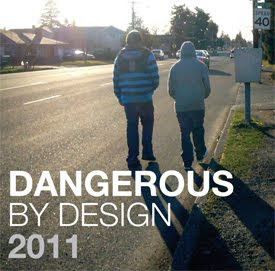
Transportation For America (T4 America) recently released their 2011 pedestrian safety report, Dangerous By Design 2011, which examines the problem of and offers solutions for the epidemic of preventable pedestrian deaths on our nation's streets. From 2000-2009, more than 47,700 pedestrians were killed and 688,000 were injured while traversing the country's roadway network. Given these statistics, the report asserts that the decades-long neglect of pedestrian safety in the design and use of America's streets is taking a heavy toll on our lives. Pedestrian deaths in the U.S. over the past decade are equivalent to a jumbo jet full of passengers crashing every month for the past ten years. The 688,000 injuries over this same period of time equate to a pedestrian being struck by a vehicle every seven minutes.

Nationwide, pedestrians account for nearly 12% of total traffic deaths, though state DOT's have allocated only 1.5% of available federal funds to projects that retrofit dangerous roads or create safe alternatives. In the nation's 15 largest metropolitan areas, pedestrian fatalities have actually increased over the past decade, even as overall traffic deaths fell. Children, older adults, and racial/ethnic minorities are disproportionately represented in these fatal statistics, but people of all ages and walks of life have been struck down in the simple act of walking.

The lack of federal funding dedicated to pedestrian improvements is mainly due to the perception that pedestrian safety is a local issue, even though 67% of the 47,700 pedestrian deaths over the past decade occurred on federal-aid roadways, major roadways eligible for federal funding for construction/improvements, and under federal guidelines for design. The majority of pedestrian deaths in the past decade share a common theme: though labeled as "accidents", they occurred along arterial roadways that were dangerous by design. These streets were engineered for speeding traffic with little or no provision for people on foot, in wheelchairs, or on bicycles.

Dangerous by Design 2011 also includes a ranking of the 52 largest metropolitan areas in the U.S. and how dangerous they are to pedestrians. The Orlando-Kissimmee, Florida metro area is considered the most dangerous, and three other Sunshine State metro areas are in the top five. The Philadelphia-Camden-Wilmington metro area is ranked 39 out of 52, in addition to having 3.8% of its population walking to work. Correspondingly, T4 America developed an interactive map to document the location of all pedestrian fatalities from 2001 to 2009.

T4 America makes several recommendations for provisions in the next Surfact Transportation Authorization bill to improve nationwide pedestrian safety along roadways. These recommendations include: retaining dedicated federal funding for safety of people on bicycle or foot (such as Safe Routes to School and Transportation Enhancements), adoption of a national complete streets policy, filling in strategic gaps in the pedestrian network, committing a fair share of federal funding to pedestrian safety, and holding states accountable for creating communities that are safe for walking.

Thursday, May 5, 2011

GVF Rallies for Bicycling and Walking [Video]

On May 4, Harrisburg was swarmed by bikers. These bikers were not tattooed outlaws riding loud motorcycles, but rather were clicking around in their bicycle shoes, sporting helmets and reflectors. The 3rd Annual PA Walks and Bikes Summit was held to draw attention to the needs of pedestrians statewide. PA Walks an Bikes is a statewide coalition of pedestrian and bicycle advocates including bicycle industry folks, transportation professionals, and concerned private citizens.

The Summit began with a rally on the steps of the capital rotunda. Standing in front of more than thirty bicycling advocates Republican Chair of the House Transportation Committee Rick Geist declared that “bicycling in Pennsylvania is alive and well.” Representative Bill Kortz stood and said that he is a cyclist and finds it “exhilarating.” When Representative Ron Miller spoke, he had much support for his bill, HB 170, which calls for motorists to allow a four foot safe passing buffer when passing a bicycle on the road. Miller said “if we all share the roads we can get more people bicycling.”


After the rally in the rotunda, the group moved to the Keystone Building for a discussion and information session. Jeff Peel of the Leauge of American Bicyclists presented information on programs that rank states in order of bicycle friendliness. Pennsylvania is ranked 42nd of 50, which is actually worse than in 2010 when we were ranked 40th. Peel went on to speak about the bicycle friendly community, to which Philadelphia is the only eastern PA city on the list; Philly is a bronze level.

It was evident that we have quite a ways to go to make Pennsylvania a more bicycle friendly state. With this information, the attendees left to meet with state senators and representatives. GVF met with Senator Daylin Leach of the 17th Senatorial District and Representative Tim Briggs of the 149th House District. Both were supportive of bicycle and pedestrian needs, Representative Briggs voted to pass the HB 170 from the transportation committee.

At the end of the day the message of the need to make bicycling and walking viable alternatives for Pennsylvanians was brought to the capital. The work does not end with the rally, but only begins. To see PA raise its national ranking much work has to be done. It is still difficult to include bicycle and pedestrian needs in the design of new transportation projects, and funding is always a struggle. Changing the perception that bicycling is only a recreation and not transportation is the first step. Investments in bicycling networks are much more cost effective, and much more environmentally friendly.

To promote bicycling as mode of transportation, GVF is sponsoring our third annual Bike to Work Challenge. To register visit www.gvfbiketowork.com. If you want to get involved in bicycle advocacy, visit www.pawalksandbikes.org.

Thursday, March 17, 2011

Miles Per Dollar vs. Miles Per Gallon

You hear it in every car commercial. Fantastic claims that their flashy new car gets excellent miles per gallon. It is a simple metric to calculate, take the number of gallons of fuel and divide it by the number of miles driven. Miles per gallon is a standard for measuring the efficiency of a vehicle against any other vehicle. If you are on the fence between an SUV or a sedan, the miles per gallon will be a consistent measure to clue you into the cost of driving. Miles per gallon has also become a bragging right for people with extremely efficient cars. Hybrid owners will turn their nose up in hubris as they proudly declare that they get 51 miles per gallon, then with a smug tone ask what your SUV gets.

What happens when you get your new car home? Does miles per gallon tell you how much your car is costing you? To know how expensive your commute is, or to decide whether to make a special trip for milk rather than stringing it as part of your next trip try calculating your Miles Per Dollar. Miles per dollar, much like miles per gallon is a measure that can be consistent across any vehicle, but what miles per dollar does better than miles per gallon is helps make transportation decisions. When we equate miles per gallon it assumes that we must drive, miles per dollar assumes we must travel. To calculate miles per dollar divide the total number of miles driven by the amount of money spent fueling your car. Example: If you drive 500 miles and it costs $75.00 to fill your fuel tank then your car gets 6.67 miles per dollar.

Once you are equipped with the knowledge of how expensive it is to drive, start considering alternative modes of transportation. For short trips, it will be more economical to leave the car at home and take a bicycle. For longer trips, taking SEPTA may pay off. If you can't take SEPTA or ride a bike, try carpooling.

Knowing your miles per gallon may give you something to brag about at your next cocktail party, but knowing your miles per dollar will save you money and make you a smarter traveler.


Thursday, January 27, 2011

Old Betzwood Bicycle/Pedestrian Trail Project

On Wednesday, February 16th from 4:00 p.m. to 8:00 p.m., a Public Open House will be held at Education Center of Valley Forge National Historical Park to display the proposed plans for the Betzwood Pedestrian Bridge, a part of the US 422 River Crossing Complex Project. In 1995, the Betzwood Bridge, linking PA Route 23 with Trooper Road, was demolished due to its deteriorating condition. This deeply affected bicycle and pedestrian travel across the Schuylkill River at this strategic location, which linked the Schuylkill River Trail with trail networks in Valley Forge National Historical Park. Since that time, bicyclists and pedestrians have traveled over a narrow boardwalk on the US Route 422 bridge to cross the river, a daunting path that was meant as an interim solution.


The Old Betzwood Bicycle/Pedstrian Trail Project will rebuild the Betzwood Bridge as a Schuylkill River crossing exclusively for bicyclists and pedestrians, linking the regional trail systems of Montgomery County, Chester County, Valley Forge National Historical Park, and Upper Merion Township. These new connections will improve recreational opportunities, expand bicycle commuter options, improve access for visitors at Valley Forge National Historical Park, reduce auto dependency, and promote green travel patterns. While the bridge is meant primarily for bicycle and pedestrian usages, it will also be accessible for emergency vehicles up to 20 tons. The design and environmental review for the bridge is expected to continue through Summer 2011, with construction bids going out in Fall 2011. Construction of the bridge will begin in Spring 2012 and be completed by Fall 2013. While the Old Bestwwod Bicycle/Pedestrian Trail Project will serve the area's growing non-auto demands, separate projects in the US 422 River Crossing Complex that will rebuild and improve the US 422 bridge and nearby interchanges are also underway to meet future travel demands.

 
Design by Free WordPress Themes | Bloggerized by Lasantha - Premium Blogger Themes | Blogger Templates